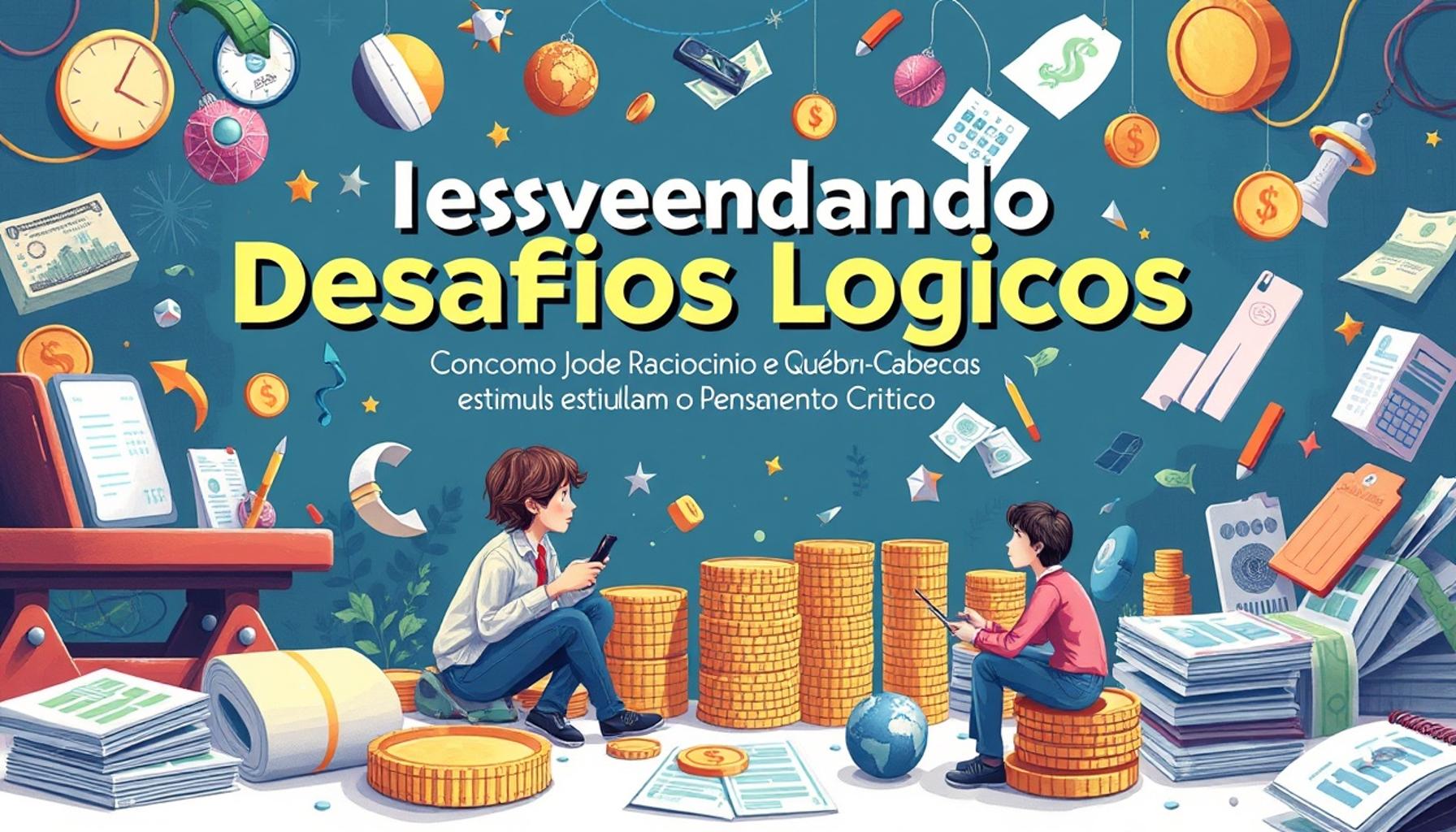
The Importance of Logic Exercises for the Development of Creative Thinking and Analytical Reasoning

The Importance of Logic Exercises in Enhancing Cognitive Skills
In an era where information saturates our lives, both students and professionals find themselves confronted with complex problems requiring sharp analytical skills. As challenges mount, the practice of logic exercises emerges as a critical tool to unlock potential, facilitating not just academic achievements but enriching everyday decision-making abilities as well. By engaging with these exercises, individuals can hone their mental faculties and approach problems with enhanced clarity and creativity.
Logic exercises play a monumental role in sharpening critical thinking skills. By systematically analyzing problems and interpreting data, individuals learn to evaluate situations from multiple perspectives. Take, for example, the entrance exams that students in Nigeria must navigate. Logic puzzles and reasoning tasks found in these exams are designed to test not only knowledge but also the ability to decipher and deduce information quickly. Practicing these exercises with regularity can empower students, allowing them to approach these exams with both confidence and competence.
In addition to assisting students, these exercises cultivate innovative problem-solving strategies among professionals. In sectors such as technology, healthcare, or even agriculture—a cornerstone of the Nigerian economy—employees who can think outside the box and develop unique solutions are invaluable. For instance, a software developer tackling a coding issue might engage in logic exercises prior to brainstorming their approach. The systematic thinking developed through these exercises often leads to more effective and efficient solutions in the workplace.
Furthermore, engaging in logic exercises can significantly enhance communication and collaboration skills. In Nigeria, where teamwork is often integral to various sectors, the ability to articulate thoughts clearly and logically is crucial. Team members who practice these skills are better equipped to share ideas, negotiate, and resolve conflicts, ultimately improving group dynamics and productivity.
As educational institutions evolve to meet contemporary demands, and as the job market grows increasingly competitive, the blend of critical and creative thinking offered through logic exercises stands out as essential for success. This holistic approach to cognitive development positions individuals not just to survive in their careers, but to thrive, paving the way for a brighter future. Thus, whether you are a student preparing for exams or a professional seeking to elevate your career, incorporating logic exercises into your routine is not just beneficial; it is imperative.
LEARN MORE: This related article may interest you
Unlocking the Power of Logic Exercises
To grasp the significance of logic exercises in developing both creative thinking and analytical reasoning, it is essential to understand the cognitive processes they enhance. These exercises require individuals to engage in structured thought patterns, thereby sharpening their ability to analyze situations rationally. This engagement is not limited to theoretical applications but extends to practical scenarios faced daily in Nigerian households, workplaces, and schools.
One of the most compelling aspects of logic exercises is their ability to promote problem-solving skills. When faced with real-life issues—be it resolving a dispute within a community or determining the best approach to optimize agricultural output—effective reasoning can lead to innovative solutions. For instance, farmers in Nigeria are increasingly turning to cutting-edge agricultural techniques. By applying logic exercises, they can assess the various outcomes from implementing a new irrigation system versus traditional practices, making informed decisions that significantly enhance productivity. This analytical process mirrors the workings of logic puzzles where each option requires careful evaluation.
The benefits of regular practice in logic exercises transcend mere problem-solving; they also foster creativity. Engaging with different forms of logic puzzles—such as deductive reasoning challenges, pattern recognition games, and lateral thinking problems—encourages flexibility in thought. This cognitive flexibility is vital in today’s fast-paced world where static thinking can hinder progress. When students in Nigeria encounter either mathematics or science problems, those with a background in logic training often approach the situation with a diverse array of solutions, showcasing their enhanced creativity.
In addition to these cognitive advancements, another key area enhanced by logic exercises is decision-making. When individuals routinely practice logic, they learn how to evaluate evidence, weigh options, and make sound judgments based on their analyses. This capability becomes paramount in environments requiring critical decisions, such as in healthcare settings where practitioners must assess patient data swiftly. As medical fields in Nigeria continue to evolve, professionals who can deduce information from diagnostic reports or treatment options are invaluable.
Benefits of Logic Exercises
- Enhanced Problem-Solving Skills: Develop analytical methods for tackling challenges.
- Improved Creativity: Foster innovative thinking through diverse approaches.
- Stronger Decision-Making: Learn to analyze evidence and make informed choices quickly.
- Collaboration and Communication: Improve the ability to articulate thoughts logically to others.
Integrating logic exercises into educational curriculums and professional training in Nigeria can significantly bolster cognitive development in both students and the workforce. As these exercises continue to gain recognition globally, they present a unique opportunity to enhance one of Nigeria’s most valuable resources: its human intellect. Whether in classrooms, boardrooms, or everyday situations, the lessons garnered from logic exercises empower individuals and shape a resilient and innovative society.
Logic exercises play a pivotal role in enhancing both creative thinking and analytical reasoning. By engaging with puzzles, riddles, and logical problems, individuals are not only challenged but also stimulated to think outside the box. Such exercises encourage a flexible mindset where ideas can flow freely, often leading to innovative solutions and creative breakthroughs. Moreover, these activities foster critical thinking skills which are essential in today’s fast-paced and ever-evolving world. The process of dissecting complex problems requires one to break down information, analyze different components, and synthesize understanding—skills that are crucial in academic pursuits and professional environments alike. Furthermore, logic exercises cultivate perseverance and patience. They teach individuals how to approach problems methodically, trial various strategies, and learn from failures and mistakes, which ultimately enhances resilience, a vital trait for any successful thinker. The interplay between creative thinking and analytical reasoning is profound; one often complements the other. For instance, an innovative idea may necessitate an analytical approach to implementation. Conversely, rigorous analysis can uncover new creative avenues to explore. This symbiotic relationship underscores the importance of incorporating logic exercises into daily routines for anyone looking to enhance their cognitive abilities.You can deepen your understanding of this topic by exploring resources that offer diverse logic exercises, thereby allowing you to practice and improve both your creative and analytical skills continuously.
SEE ALSO: Click here to read another article
Building a Foundation for Lifelong Learning
The impact of logic exercises extends beyond immediate problem-solving and creativity; they also cultivate a valuable skill set for lifelong learning. These exercises encourage the practice of questioning assumptions and exploring alternative views, which is crucial in an era where information is abundant, yet discernment is often lacking. In Nigeria, a nation rich in culture and tradition, individuals who engage in logic exercises learn to embrace complexity and examine various perspectives, essential in navigating a diverse society.
Moreover, critical thinking emerges as another fundamental benefit derived from logic exercises. In educational settings, students equipped with critical thinking skills approach their studies and discussions with a heightened sense of inquiry. This ability to analyze and evaluate different elements allows student debates to flourish, promoting an environment where ideas can be exchanged and refined. For instance, Nigerian universities are increasingly adopting platforms for group discussions and project-based learning, where students adept in logic can guide teams toward innovative outcomes by critically examining ideas presented.
Logic as a Tool for Innovation
Another compelling aspect of logic exercises lies in their role as a catalyst for innovation. Many great inventions and breakthroughs stem from the marriage of logical reasoning and creative thought. By integrating logical frameworks into creative processes, individuals can optimize their ideas into practical solutions. For example, Nigerian startups in the tech industry, such as those focusing on mobile banking or e-health solutions, thrive on the ability to assess user needs through rigorous logic exercises that lead to innovative product developments. Through this approach, they refine their concepts based on user feedback, facilitated by their strong grasp of logic and reasoning.
Social skills also benefit from the practice of logic. Engaging in logic exercises often involves collaboration, whether through group puzzles or competitive games that require team strategies. This environment fosters communication skills as participants must articulate their thought processes and persuade team members towards a common solution. Nigerian communities frequently engage in problem-solving workshops that utilize logic exercises, where teams work together to address local challenges such as energy shortages or educational disparities, emphasizing the social dimension of analytical reasoning.
The Role of Technology and Resources
The rise of technology has made logic exercises more accessible than ever. Online platforms offer a variety of tools, such as logic-based games and courses that nurture both analytical reasoning and creative thinking skills. In Nigeria, resources like mobile apps designed for logic training can engage young minds, making learning interactive and enjoyable. Schools and organizations increasingly utilize these platforms to complement traditional education, helping bridge the gap between theory and practical application.
- Lifelong Learning: Cultivate inquiry and acceptance of diverse perspectives.
- Critical Thinking Development: Encourage analysis and debate in educational settings.
- Innovation Catalyst: Merge logic with creativity for practical solutions.
- Enhanced Social Skills: Foster teamwork and communication through collaboration.
- Technological Resources: Leverage online platforms and apps for accessible training.
As Nigeria progresses in various sectors, integrating logic exercises into everyday activities is not just a beneficial endeavor but a necessary one for creating a society that values critical thought and innovative solutions. With each puzzle and problem executed, individuals lay a foundation impacting not only their future but also the collective development of the nation.
RECOMMENDED: Check out this similar article
Conclusion: Unleashing Potential Through Logic Exercises
In a world driven by rapid change and an influx of information, logic exercises stand out as essential tools for fostering both creative thinking and analytical reasoning. The multifaceted benefits of these exercises range from enhancing critical thinking skills to promoting social collaboration, all while paving the way for innovation. As explored in the context of Nigeria, where diversity is a hallmark of society, logic exercises empower individuals to appreciate different viewpoints and navigate complexities effectively.
Furthermore, the integration of technology into the realm of logic training has revolutionized access to these skills. With mobile apps and online platforms providing engaging avenues for practice, the younger generation is increasingly equipped to face challenges with fresh perspectives. This accessibility is not merely a luxury but a necessity in cultivating a workforce that can adapt, innovate, and contribute meaningfully to their communities.
As educational institutions and organizations continue to embrace logic exercises, it becomes imperative for individuals—be they students, professionals, or community members—to recognize the significant role these practices play in shaping a proactive mindset. By embedding logic exercises into daily routines, Nigerians can foster a culture of inquiry and resilience that transcends mere academic success. Ultimately, the journey toward enhanced creative thinking and analytical reasoning through logic exercises is a vital investment in the future—a future that promises not only personal growth but also collective advancement for the nation as a whole.

Beatriz
Beatriz Johnson is a seasoned puzzle enthusiast and writer with a passion for unraveling the complexities of mind games and brain teasers. With over a decade of experience in the world of puzzles, she specializes in topics like logic games, riddles, and strategic challenges. Through her work, Beatriz empowers readers to sharpen their problem-solving skills, think creatively, and stay engaged in the ever-evolving landscape of mind games and puzzles.